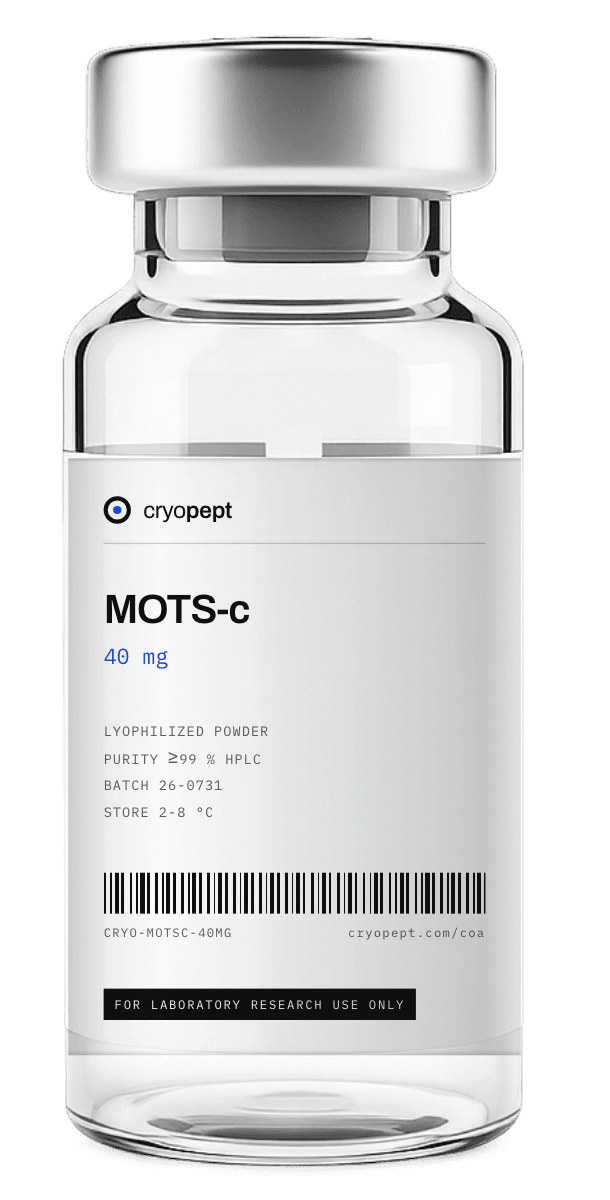
MOTS-c (Mitochondrial Open reading frame of the 12S rRNA type-c) is unusual: it is a short peptide encoded not in the cell nucleus but within the mitochondrial genome, in the 12S ribosomal RNA gene. It is one of the few known mitochondria-derived peptides with systemic signalling activity.
Why it is called an exercise mimetic
Plasma MOTS-c rises acutely with physical exercise in both rodents and humans. In preclinical models it produces metabolic adaptations that resemble those seen after training, which is why the research community often describes it as an "exercise mimetic" - a description of an observed profile, not a therapeutic claim.
Recent research
- A 2026 study reported that MOTS-c improves intrinsic muscle mitochondrial bioenergetic health and efficiency in a PGC-1α/AMPK-dependent manner - two central regulators of energy metabolism.
- A 2025 study in Frontiers in Physiology examined MOTS-c and mitochondrial respiration in the type 2 diabetic heart, where mitochondrial energy supply to contractile proteins is disturbed.
Clinical status
Human data remain early and are best read as biomarker and physiology research rather than established therapy. The field is transitioning from preclinical work toward early clinical testing, with a Phase 2a prediabetes trial underway in 2026. MOTS-c is not an approved medicine.
This article is scientific and regulatory information about compounds studied in research. It is not medical advice and makes no claim of any effect in humans. All products sold by Cryopept Labs are for laboratory research use only - not for human or veterinary use.