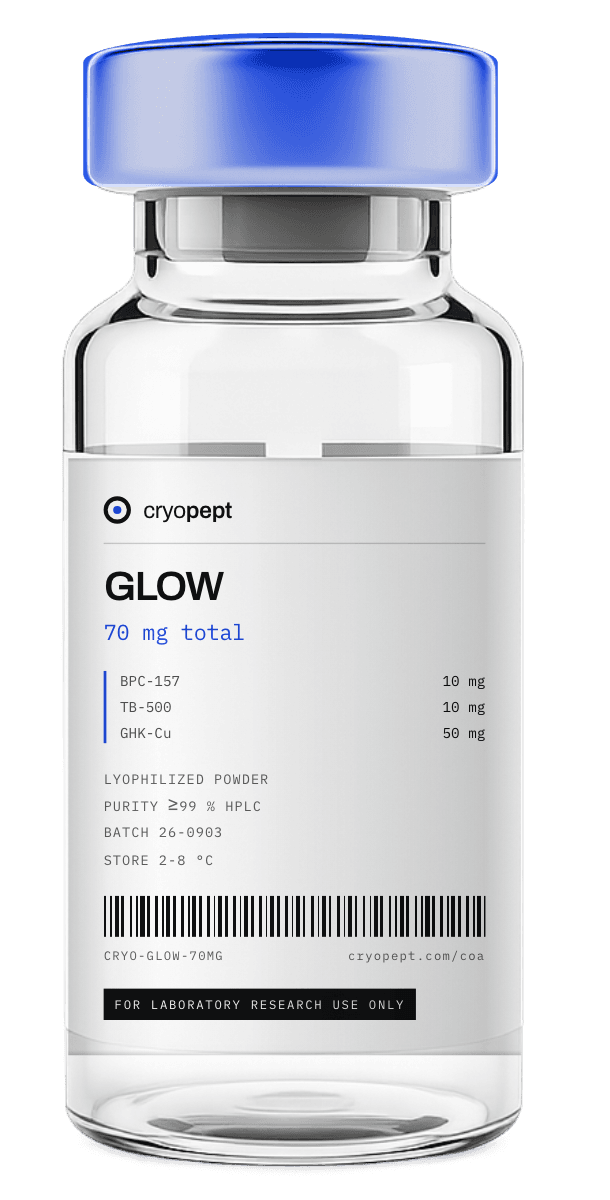
What is GLOW?
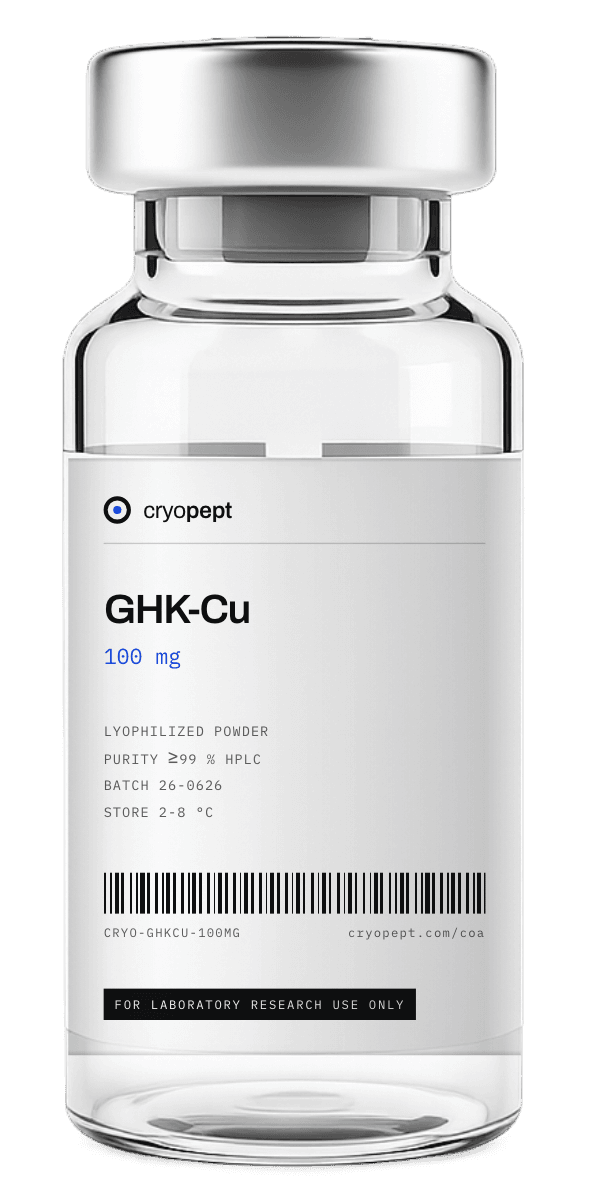
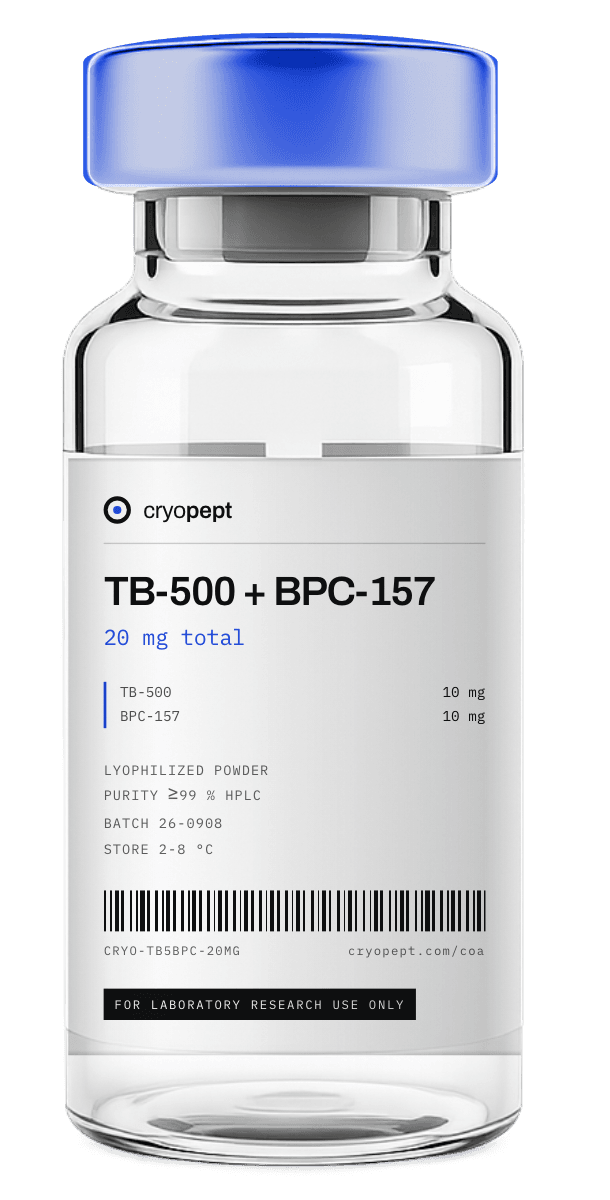
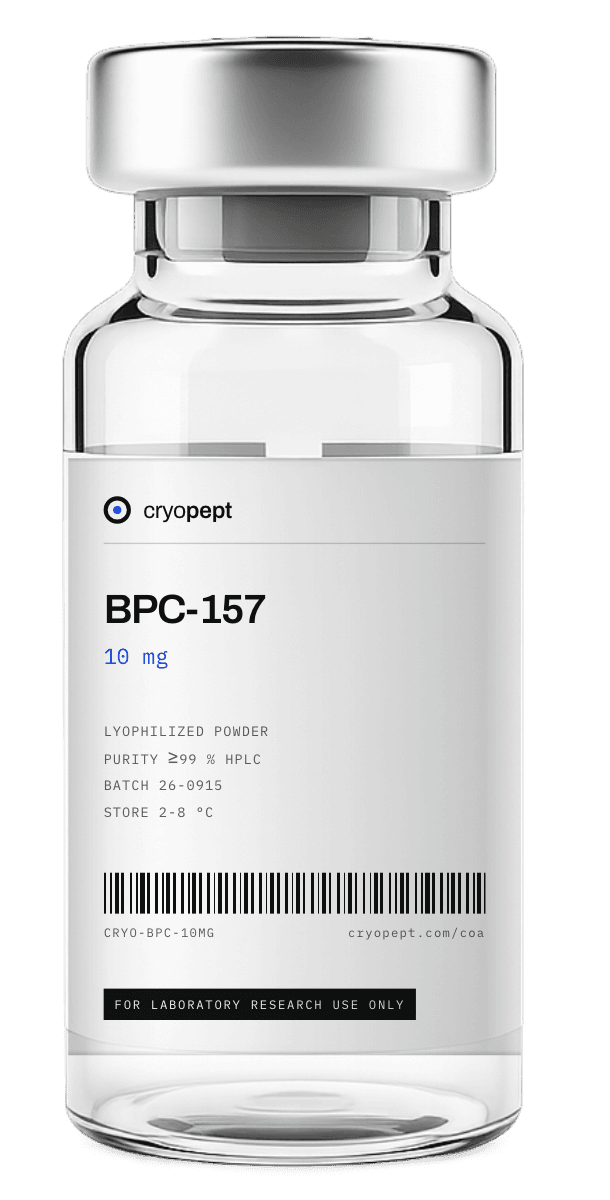
GLOW brings together three well-researched regenerative peptides, co-lyophilized in a single 10 ml vial. The dominant component by mass is GHK-Cu (50 mg), a natural copper-binding tripeptide (glycine-histidine-lysine) first isolated from human plasma, whose levels are reported to decline with age. It is complemented by 10 mg of BPC-157, a 15-residue gastric peptide fragment, and 10 mg of TB-500, a synthetic peptide modelled on the actin-binding motif of thymosin beta-4.
The name reflects the research focus: skin quality and tissue repair. Each peptide addresses a different part of that process. GHK-Cu is proposed to deliver copper to fibroblasts and switch on production of collagen, elastin and glycosaminoglycans, the scaffolding that gives skin its firmness. TB-500 binds G-actin, the protein cells use to migrate into damaged areas. BPC-157 is linked to VEGFR2 and nitric-oxide signalling that drive new blood vessel formation.
In short: GHK-Cu builds the matrix, TB-500 moves the cells, and BPC-157 feeds the tissue with new vessels. That is why the three are researched as one combination rather than on their own.
Benefits of GLOW reported in research
Evidence level shown on each card.More collagen from skin fibroblasts (GHK-Cu)
In a 1988 fibroblast study, GHK-Cu stimulated collagen synthesis from concentrations as low as 1-10 picomolar, peaking at 1 nanomolar, independent of cell number (Maquart, FEBS Lett).
Connective-tissue build-up in wounds (GHK-Cu)
In rat wound chambers, GHK-Cu increased collagen, glycosaminoglycans, DNA and total protein in a concentration-dependent way and raised type I and III collagen mRNA (Maquart, J Clin Invest 1993).
Firmer, smoother skin in cosmetic studies (GHK-Cu)
A 2015 review summarises cosmetic studies in which topical GHK-Cu products tightened loose skin and improved elasticity, density and firmness, and reduced fine lines and photodamage.
Faster wound closure (thymosin beta-4)
Thymosin beta-4, the parent protein of TB-500, increased re-epithelialisation of rat skin wounds by 42 % at day 4 and up to 61 % at day 7, with more collagen and new vessels (Malinda 1999).
New blood vessel growth (BPC-157)
BPC-157 increased vessel density in chick embryo and human endothelial cell assays and restored blood flow in ischemic rat limbs by up-regulating VEGFR2 (Hsieh 2017).
What the research shows
GHK-Cu has been studied since Loren Pickart identified GHK in human plasma in the 1970s. Maquart et al. showed in 1988 that it stimulates collagen synthesis in fibroblast cultures at picomolar to nanomolar concentrations, and in 1993 (J Clin Invest) that injecting it into rat wound chambers increased collagen, dermatan sulfate and other matrix components, with no effect from a control tripeptide. A 2015 review by Pickart et al. reports that GHK can up- or down-regulate at least 4,000 human genes and summarises cosmetic studies showing improved skin firmness and fewer fine lines.
Thymosin beta-4, the protein TB-500 is based on, is a well-characterised wound-healing factor released by platelets. In Malinda et al. (J Invest Dermatol, 1999) it accelerated rat skin wound re-epithelialisation by up to 61 % and stimulated keratinocyte migration 2-3-fold in vitro. Full-length thymosin beta-4 later reached phase 2 human trials in venous and pressure ulcers.
BPC-157 contributes the vascular piece. Hsieh et al. (J Mol Med, 2017) showed it activates the VEGFR2 - Akt - eNOS pathway in human endothelial cells and speeds blood-flow recovery in rats. The GLOW combination as a whole has not been tested in published studies; its rationale is built on these complementary component data.
GLOW - frequently asked questions
What is in the GLOW peptide blend?
+
Each GLOW vial contains 10 mg BPC-157, 10 mg TB-500 and 50 mg GHK-Cu, 70 mg in total, co-lyophilized as one powder. The three peptides are researched for skin and connective-tissue regeneration.
What are the benefits of the GLOW blend?
+
Research on the components reports that GHK-Cu increases collagen and matrix production, thymosin beta-4 accelerates skin wound closure and BPC-157 promotes new blood vessel growth. These findings come mainly from cell and animal studies, plus small cosmetic studies on topical GHK-Cu.
What is the difference between GLOW and KLOW?
+
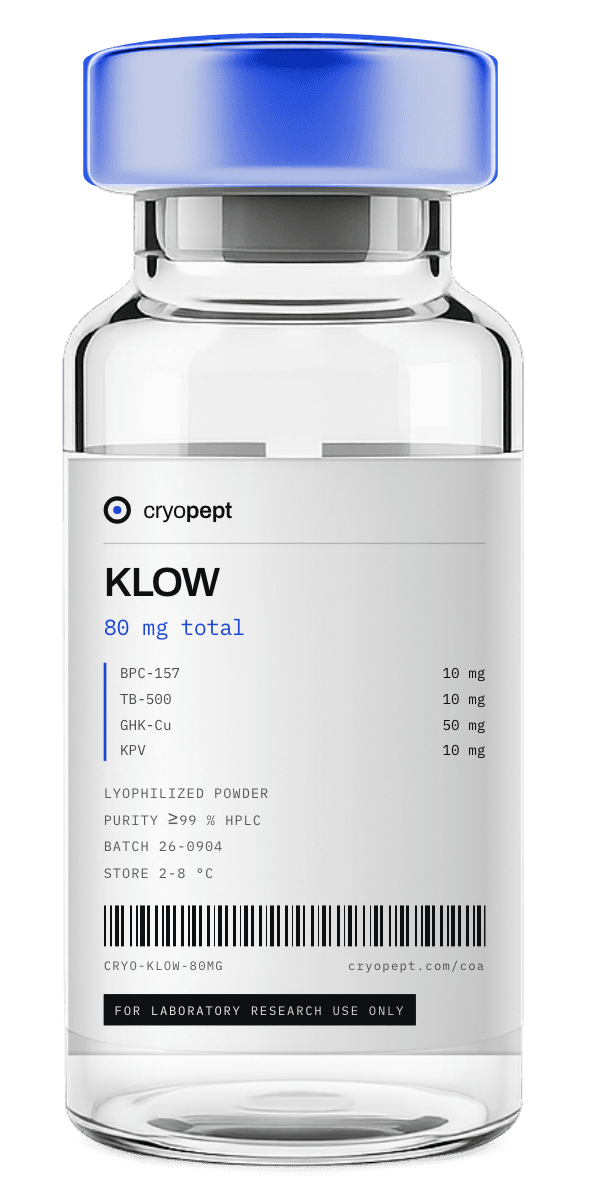
GLOW contains three peptides: BPC-157, TB-500 and GHK-Cu. KLOW contains the same three plus 10 mg of KPV, an anti-inflammatory tripeptide from α-MSH, for 80 mg total.
Why is GHK-Cu blue?
+
GHK-Cu is a complex of the tripeptide GHK with a copper(II) ion, and copper(II) complexes absorb red light and appear blue. A blue tint in a GHK-Cu-containing powder is expected.
How should the GLOW blend be stored?
+
Keep the lyophilized vial sealed at -20 °C and away from light, since the copper peptide is light-sensitive. Once dissolved, store it at 2-8 °C and avoid repeated freezing and thawing.