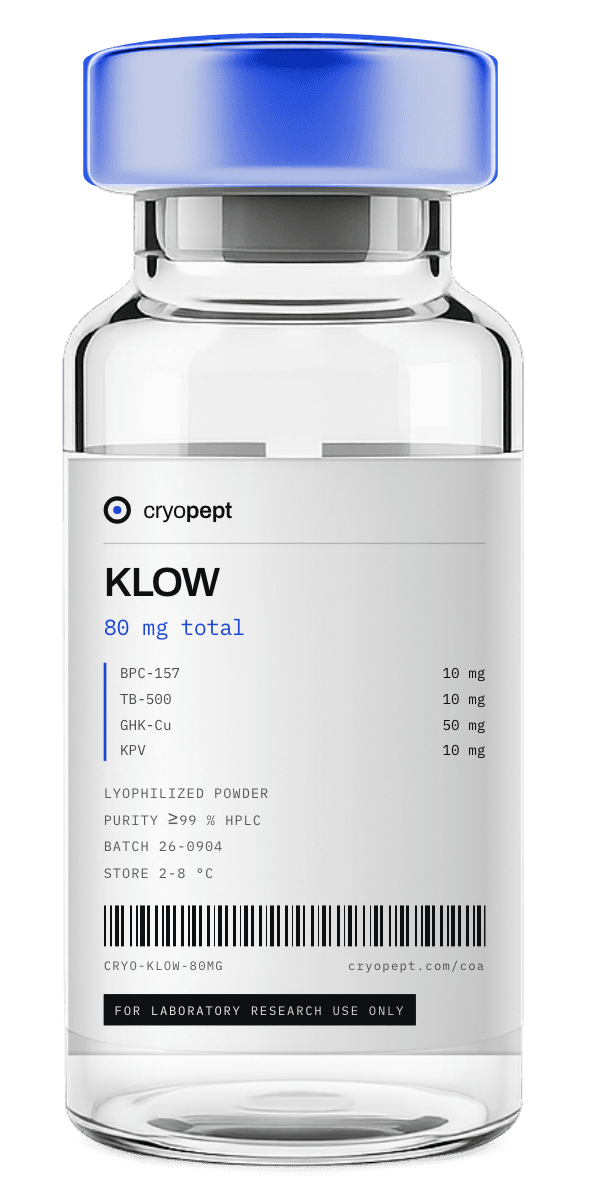
What is KLOW?
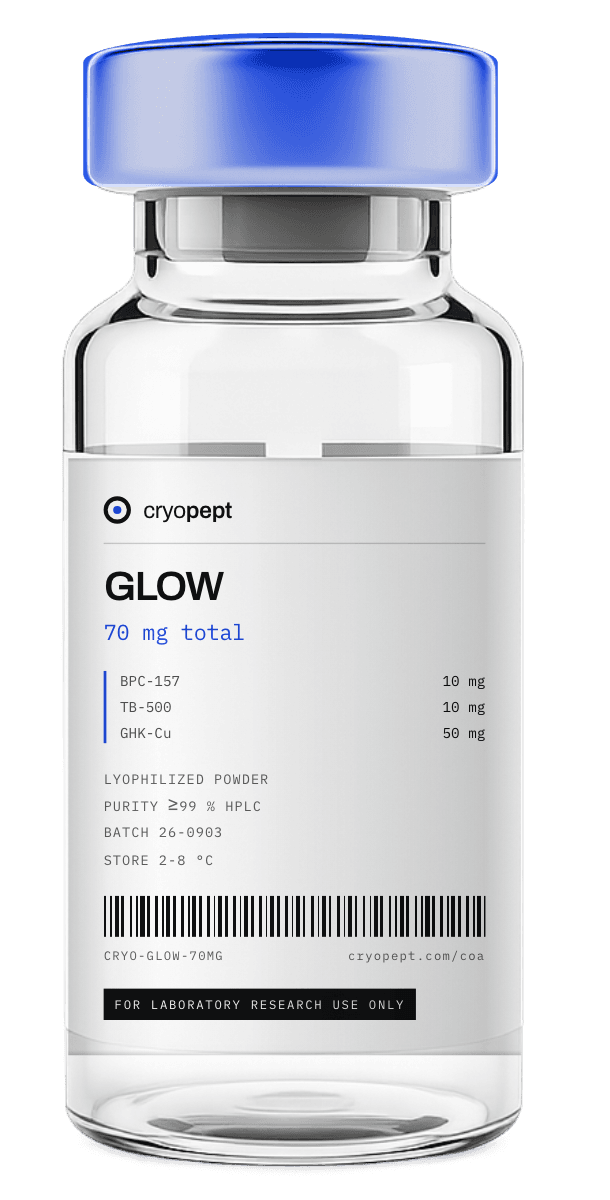
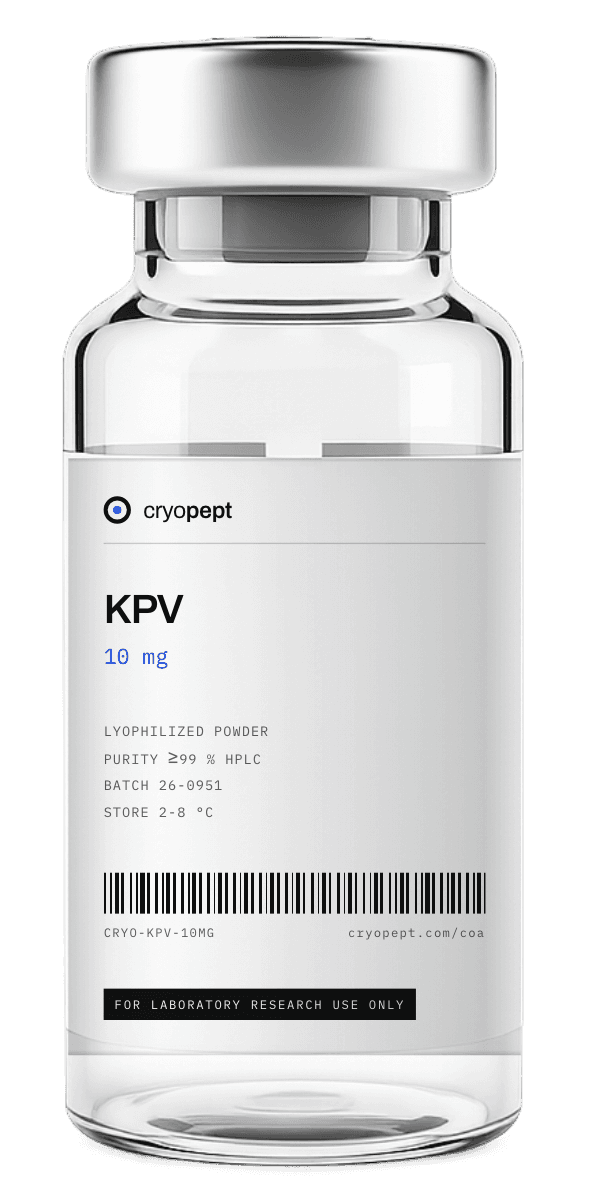
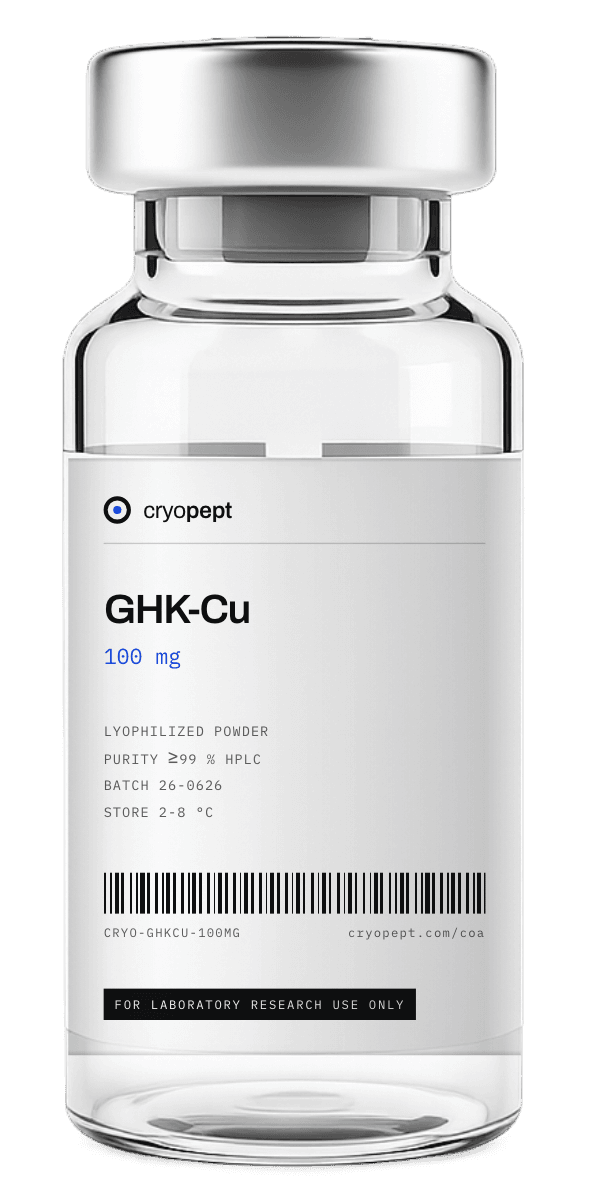
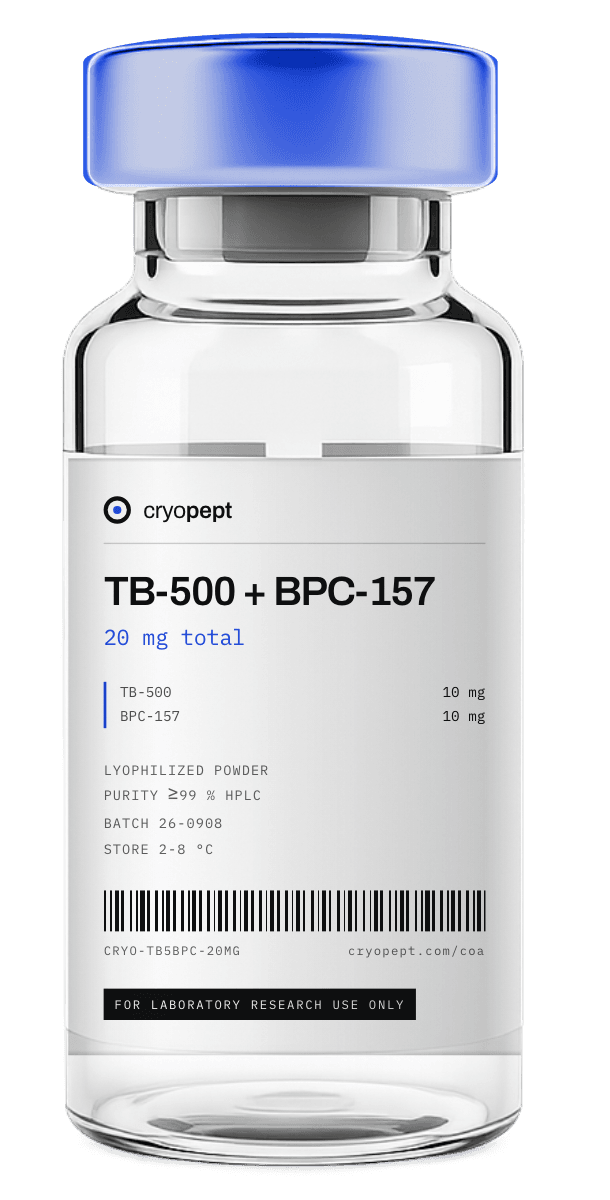
KLOW is named for its extra letter: K for KPV. Three of its components are the same as in GLOW: BPC-157 (a 15-residue fragment of a gastric protective protein), TB-500 (a synthetic peptide built on thymosin beta-4's actin-binding motif LKKTETQ) and GHK-Cu (the copper complex of the plasma tripeptide glycine-histidine-lysine). The fourth, KPV (Lys-Pro-Val), is residues 11-13 of the hormone α-MSH.
Why add an anti-inflammatory peptide to a repair blend? Healing and inflammation are linked: an early inflammatory phase is needed, but prolonged inflammation holds tissue repair back. KPV enters cells through the PepT1 transporter and inhibits NF-κB, the transcription factor that turns on many inflammatory genes. GHK-Cu has also been reported to suppress NF-κB-related activity, so KLOW puts two anti-inflammatory signals alongside two pro-repair ones.
The four roles in plain terms: BPC-157 supports blood vessel growth and tendon cell migration, TB-500 helps cells move via actin, GHK-Cu drives collagen and matrix production, and KPV calms the inflammatory response. Four peptides, four mechanisms, one co-lyophilized vial.
Benefits of KLOW reported in research
Evidence level shown on each card.Lower intestinal inflammation (KPV)
KPV inhibited NF-κB and MAP-kinase activation at nanomolar concentrations in human intestinal and T cells, and oral KPV reduced DSS- and TNBS-induced colitis in mice (Dalmasso 2008).
Faster recovery from colitis (KPV)
In two mouse colitis models, KPV-treated animals recovered earlier and regained weight faster, and in MC1R-deficient mice KPV rescued all treated animals from death (Kannengiesser 2008).
Broad regenerative gene activity (GHK-Cu)
A 2018 review reports that GHK stimulates collagen, elastin and glycosaminoglycan synthesis, blood vessel and nerve outgrowth, and suppresses NF-κB, with repair shown in skin, bone, liver and stomach lining models.
Accelerated dermal healing (thymosin beta-4)
Thymosin beta-4 sped up healing of full-thickness wounds in normal, diabetic, steroid-treated and aged rodents, and in two phase 2 ulcer trials it accelerated healing by almost a month in patients who healed (Treadwell 2012).
Tendon cell migration (BPC-157)
BPC-157 accelerated tendon explant outgrowth, raised fibroblast survival under oxidative stress and dose-dependently increased migration via FAK - paxillin signalling (Chang 2011).
What the research shows
The KPV evidence comes mainly from two 2008 papers. Dalmasso et al. (Gastroenterology) showed that KPV is transported into intestinal epithelial and immune cells by PepT1, which is induced in the colon during inflammatory bowel disease, and that it inhibits NF-κB there. Kannengiesser et al. (Inflamm Bowel Dis) confirmed anti-inflammatory effects in DSS and T-cell transfer colitis, partly independent of the melanocortin-1 receptor.
GHK-Cu contributes both matrix building and inflammation control. In their 2018 review, Pickart and Margolina describe gene-expression data showing GHK regulates pathways for collagen and elastin synthesis, antioxidant defence, proteasome activity and NF-κB suppression, alongside tissue repair reported in skin, lung connective tissue, bone, liver and stomach models.
The repair side rests on thymosin beta-4 and BPC-157. Treadwell et al. (2012) summarise thymosin beta-4 data from rodent wound models and two phase 2 trials in stasis and pressure ulcers, while Chang et al. (2011) show BPC-157 drives tendon fibroblast migration via FAK - paxillin. KLOW as a four-peptide combination has not been evaluated in published studies; its design is based on these complementary component findings.
KLOW - frequently asked questions
What is KLOW peptide?
+
KLOW is a research blend of four peptides in one vial: 10 mg BPC-157, 10 mg TB-500, 50 mg GHK-Cu and 10 mg KPV, 80 mg in total. It combines three tissue-repair peptides with the anti-inflammatory tripeptide KPV.
What are the benefits of KLOW?
+
Studies on its components report faster tendon and skin wound healing (BPC-157, thymosin beta-4), more collagen and matrix production (GHK-Cu) and reduced intestinal inflammation via NF-κB inhibition (KPV). The data come mostly from cell and animal models, plus phase 2 ulcer trials of thymosin beta-4.
KLOW vs GLOW: which is different?
+
GLOW contains BPC-157, TB-500 and GHK-Cu (70 mg). KLOW adds 10 mg KPV for 80 mg total, bringing an extra anti-inflammatory mechanism to the same repair trio.
Why is KPV added to KLOW?
+
Prolonged inflammation slows tissue repair. KPV, a fragment of α-MSH, inhibited NF-κB inflammatory signalling and reduced colitis in mouse studies, so it complements the repair-focused peptides in the blend.
How should KLOW be stored?
+
Store the lyophilized vial sealed at -20 °C, away from light and moisture. After dissolving, keep it at 2-8 °C and avoid repeated freezing and thawing.