What is Glutathione?
Glutathione is gamma-L-glutamyl-L-cysteinyl-glycine, a tripeptide of glutamate, cysteine and glycine with the formula C10H17N3O6S and a molar mass of 307.3 g/mol. It is often called the master antioxidant because it is the most abundant non-protein thiol in mammalian tissues and recycles other antioxidants such as vitamins C and E.
Two structural details explain its power. The glutamate is linked through its side chain in an unusual gamma bond that ordinary peptidases cannot cut, and the cysteine carries a thiol (-SH) group that donates electrons to neutralise oxidants. When the enzyme glutathione peroxidase converts hydrogen peroxide into water, two GSH molecules become one oxidised GSSG, which glutathione reductase then recycles back using NADPH.
Cells make glutathione in two steps, and the availability of cysteine and the enzyme glutamate cysteine ligase set the pace. The ratio of reduced to oxidised glutathione (GSH/GSSG) is one of the most widely used markers of cellular redox health, and falling glutathione is linked to ageing, liver disease and diabetes.
Benefits of Glutathione reported in research
Evidence level shown on each card.The cell's master antioxidant
Glutathione directly scavenges free radicals and, through glutathione peroxidases, reduces hydrogen peroxide and lipid peroxides to harmless products, protecting proteins, membranes and DNA from oxidative damage.
Supports liver detoxification
Glutathione S-transferases attach glutathione to drugs, toxins and reactive metabolites so they can be excreted, which is why the liver holds some of the body's highest glutathione levels.
Raises body glutathione stores
In a 6-month randomised, placebo-controlled trial in 54 adults, daily oral glutathione raised levels in the high-dose group by 30-35 % in erythrocytes, plasma and lymphocytes and by 260 % in buccal cells, while lowering the oxidised to reduced glutathione ratio.
Boosts immune function markers
The same trial found natural killer cell cytotoxicity increased more than twofold at 3 months, and a 2018 liposomal glutathione pilot reported up to 60 % higher natural killer and lymphocyte activity after 2 weeks.
Protects against chemotherapy toxicity
In a double-blind randomised trial in 151 women with ovarian cancer, adding glutathione to cisplatin let 58 % of patients complete six cycles versus 39 % of controls, with better quality of life scores including less nerve toxicity.
Improves liver enzymes in fatty liver
In a 2017 open-label pilot study in patients with nonalcoholic fatty liver disease, 4 months of oral glutathione significantly lowered ALT, triglycerides and ferritin.
What the research shows
The biochemistry is well established. Forman et al. (Molecular Aspects of Medicine, 2009) reviewed glutathione's protective roles in antioxidant defence, detoxification and redox signalling, and Lu (Biochimica et Biophysica Acta, 2013) showed how its synthesis is regulated by the NRF2 antioxidant response and disrupted in diabetes, fibrosis and alcoholic liver disease.
Human supplementation trials from Penn State have been influential. Richie et al. (European Journal of Nutrition, 2015) ran a 6-month randomised trial showing, for the first time, that daily glutathione increased body stores in blood, plasma, lymphocytes and buccal cells, with levels returning to baseline after a 1-month washout. Sinha et al. (European Journal of Clinical Nutrition, 2018) reported that liposomal glutathione raised whole-blood levels by up to 40 % within 2 weeks and cut the oxidative stress marker 8-isoprostane by 35 %.
Clinical research has also tested glutathione alongside chemotherapy. Smyth et al. (Annals of Oncology, 1997) found that in women receiving cisplatin for ovarian cancer, glutathione reduced toxicity, allowed more treatment cycles and improved depression, nausea, peripheral neurotoxicity and hair-loss scores.
Liver research continues too. In a 2017 multicentre Japanese pilot (Honda et al., BMC Gastroenterology), 29 patients with nonalcoholic fatty liver disease completed 4 months of glutathione, with significant falls in ALT and markers of fat metabolism. Larger controlled trials are needed to confirm these results.
Glutathione - frequently asked questions
What is glutathione?
+
Glutathione is a tripeptide of glutamate, cysteine and glycine produced in nearly every cell. It is the body's main small-molecule antioxidant and plays key roles in detoxification and immune function.
What are the benefits of glutathione?
+
Glutathione neutralises reactive oxygen species, supports liver detoxification and recycles other antioxidants. Human trials report higher glutathione stores, stronger natural killer cell activity, reduced chemotherapy toxicity and improved liver enzymes in fatty liver disease.
What is the difference between reduced (GSH) and oxidised (GSSG) glutathione?
+
GSH is the active, reduced form with a free thiol group that donates electrons to neutralise oxidants. After doing so, two GSH molecules join into GSSG, which the enzyme glutathione reductase recycles back to GSH using NADPH.
Is oral glutathione absorbed?
+
For a long time it was thought to be poorly absorbed, but a 6-month randomised trial published in 2015 showed that daily oral glutathione raised body stores by 30-35 % in blood compartments. Liposomal forms raised levels within one to two weeks in a smaller study.
Is glutathione legal in the EU?
+
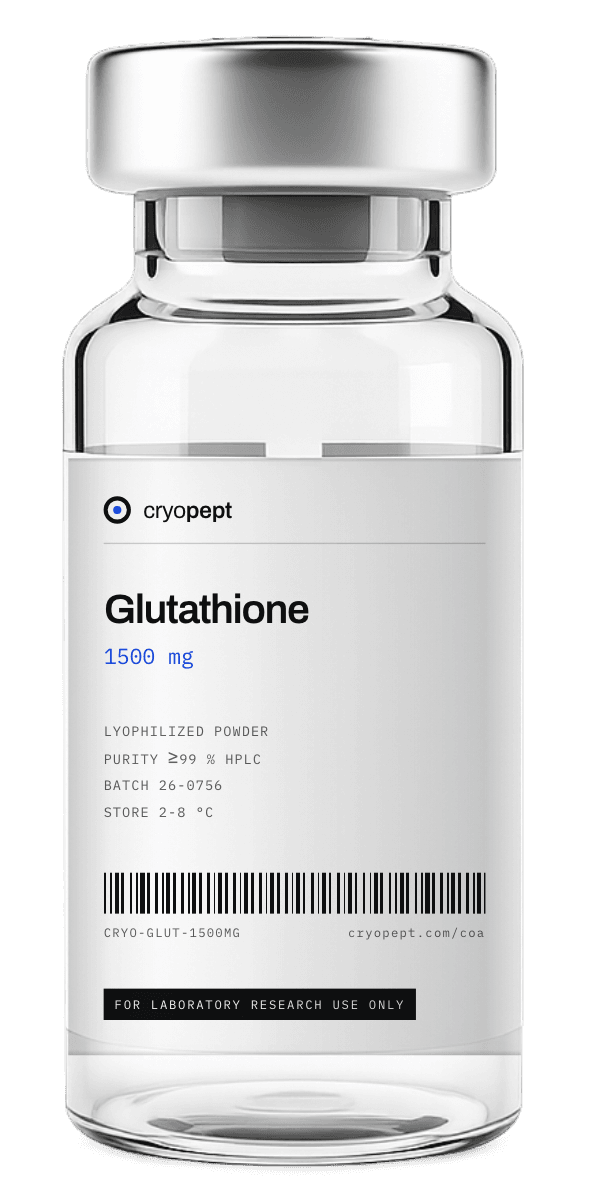
Yes, glutathione is a naturally occurring tripeptide that is legal to buy in the EU. This lyophilized 1500 mg vial is supplied for laboratory research use.