What is KPV?
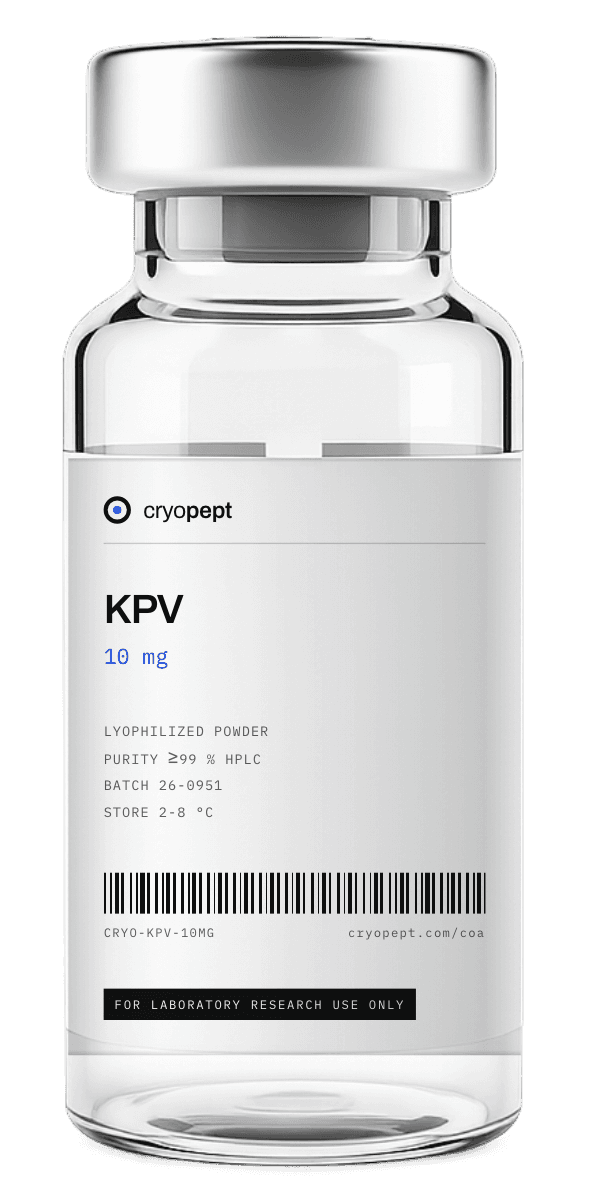
KPV (Lys-Pro-Val, formula C16H30N4O4, molar mass about 342.4 g/mol) corresponds to residues 11-13 of alpha-melanocyte-stimulating hormone (α-MSH). α-MSH is well known for skin pigmentation, but researchers found that its anti-inflammatory activity is concentrated in this short C-terminal fragment, which carries the calming signal without the tanning signal.
At just three residues, KPV is one of the smallest biologically active peptides studied. That small size matters: it is recognised by PepT1, a transporter that normally absorbs di- and tripeptides from food and becomes strongly expressed in the colon during inflammatory bowel disease.
Once inside intestinal and immune cells, KPV dampens NF-κB and MAP-kinase signalling, the pathways that turn on inflammatory genes. The result in the lab is less production of pro-inflammatory cytokines, the chemical messengers that sustain inflammation. Mouse data also show that part of the effect does not depend on the melanocortin-1 receptor.
Benefits of KPV reported in research
Evidence level shown on each card.Reduced colitis in mice
Given in drinking water, KPV reduced the severity of both DSS- and TNBS-induced colitis in mice, with lower pro-inflammatory cytokine expression in colon tissue (Dalmasso, Gastroenterology 2008).
Faster recovery and weight regain
In DSS and T-cell transfer colitis models, KPV-treated mice recovered earlier, regained more body weight and had significantly fewer inflammatory infiltrates and lower MPO activity (Kannengiesser 2008).
Blocks the NF-κB inflammation switch
In human intestinal epithelial cells and T cells, nanomolar KPV inhibited NF-κB and MAP-kinase activation and cut pro-inflammatory cytokine secretion.
Mucosal healing with targeted delivery
Oral KPV loaded into hyaluronic-acid nanoparticles accelerated mucosal healing and lowered TNF-α in a mouse ulcerative colitis model (Xiao, Mol Ther 2017).
Skin anti-inflammatory activity
Reviews of α-MSH-related tripeptides report anti-inflammatory and protective effects of KPV in skin cells and cutaneous inflammation models, without the pigmentary effect of α-MSH (Brzoska 2008).
What the research shows
The key mechanistic paper is Dalmasso et al. (Gastroenterology, 2008) from Emory University. Using human Caco2-BBE and HT29 intestinal cells and Jurkat T cells, the team showed that KPV is taken up through the PepT1 transporter and that nanomolar concentrations inhibit NF-κB and MAP-kinase signalling. In mice, KPV in drinking water reduced both DSS- and TNBS-induced colitis.
The same year, Kannengiesser et al. (Inflamm Bowel Dis, 2008) from the University of Muenster tested KPV in two colitis models. Treated mice recovered earlier, regained body weight faster and showed less tissue inflammation. In mice lacking a functional melanocortin-1 receptor, KPV rescued all treated animals from death during DSS colitis, pointing to an MC1R-independent mechanism.
Later work focused on delivery. Xiao et al. (Mol Ther, 2017) packaged KPV in hyaluronic-acid-coated nanoparticles of about 272 nm that target colonic epithelial cells and macrophages; given orally in a hydrogel, they both accelerated mucosal healing and reduced inflammation in mice. KPV has not yet been tested in published controlled human trials.
KPV - frequently asked questions
What is KPV peptide?
+
KPV is a tripeptide made of lysine, proline and valine, corresponding to the last three amino acids (11-13) of the hormone α-MSH. It carries the anti-inflammatory activity of α-MSH without its pigmentation effect.
What are the benefits of KPV?
+
In mouse colitis models, KPV reduced intestinal inflammation, lowered pro-inflammatory cytokines and sped up recovery and weight regain. In human intestinal and immune cells it inhibited NF-κB signalling at nanomolar concentrations. These results come from cell and animal studies.
How does KPV work?
+
KPV enters intestinal epithelial and immune cells through the PepT1 peptide transporter, which is up-regulated in the inflamed colon. Inside the cell it inhibits NF-κB and MAP-kinase signalling, reducing the expression of inflammatory genes.
KPV vs BPC-157: what is the difference?
+
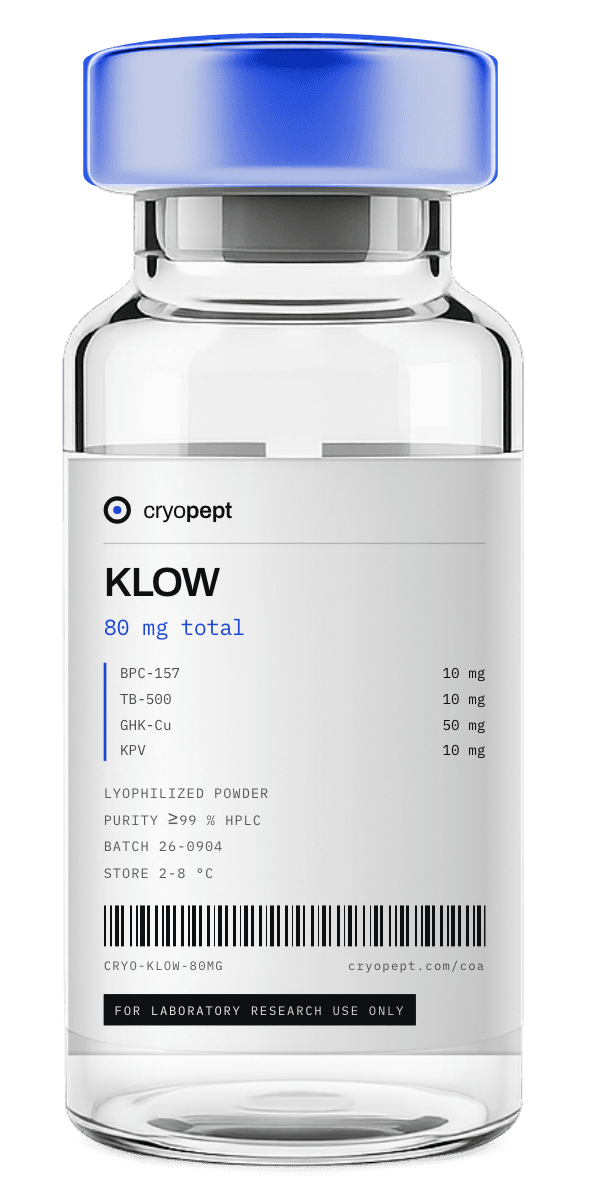
KPV is a 3-residue α-MSH fragment researched mainly for calming inflammation via NF-κB, while BPC-157 is a 15-residue gastric peptide researched mainly for tissue repair and blood vessel growth. Both have been studied in gut models, which is why they are sometimes compared or combined, as in the KLOW blend.
How should KPV be stored?
+
Lyophilized KPV should be kept sealed at -20 °C, away from light and moisture. Once dissolved, it should be refrigerated at 2-8 °C and not frozen and thawed repeatedly.